POSTCARDS FROM THE HOMELAND
Volha Maslouskaya
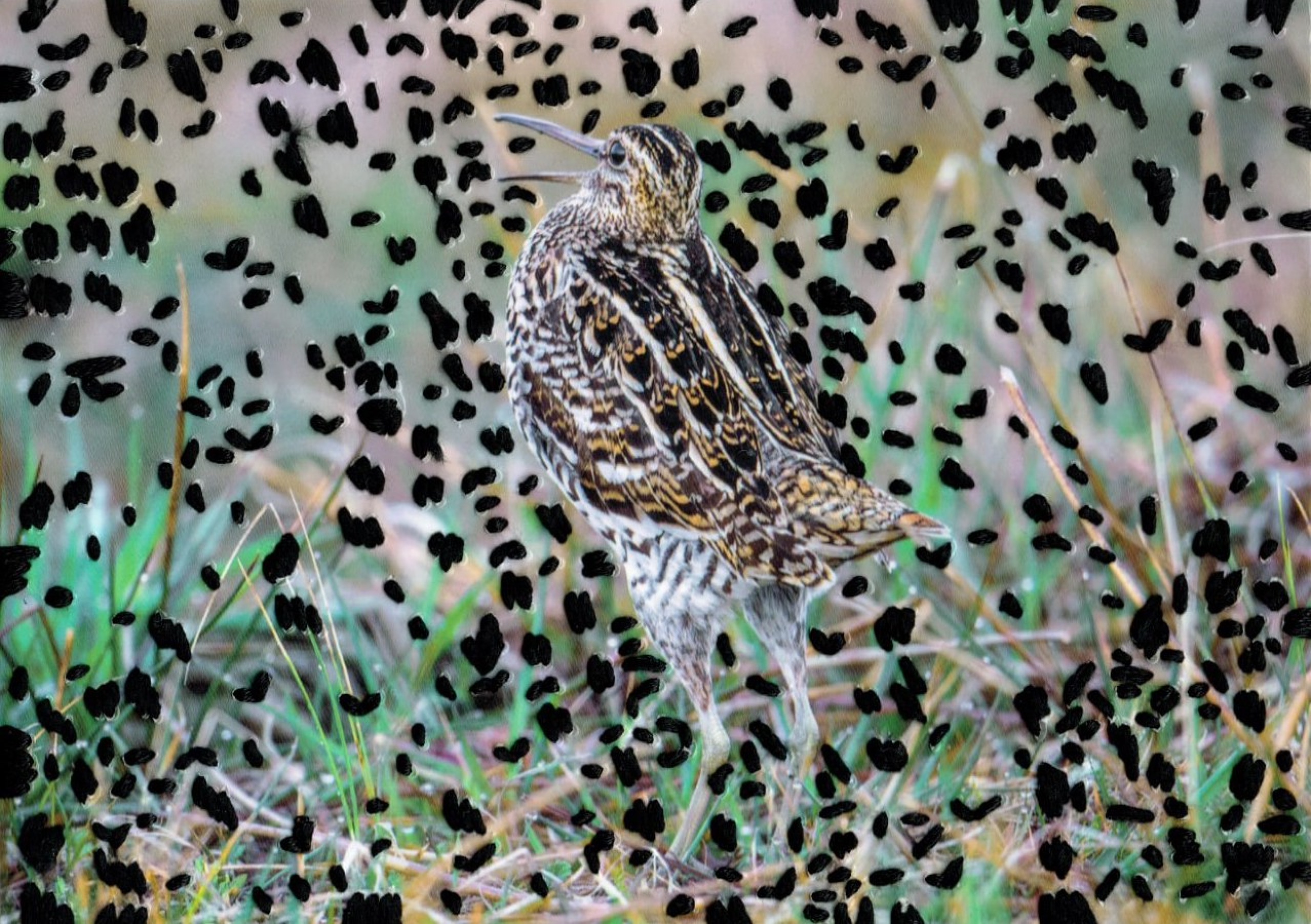
Postcards from the Homeland. Part Three: Flora and Fauna of Belarus.
The beginning of work on the series, developing the concept of embroidery on objects. This stage of the project involved research, with particular attention to the concept of mimicry and strategies of adaptation in unstable conditions.
Mimicry is understood as a way of interacting with an aggressive environment. In nature, some organisms imitate others — sometimes even predators — to avoid danger.
Beyond its biological dimension, I examine mimicry in a cultural and historical context: it is connected with postcolonial discourse, concepts of identity, and guerrilla tactics.
In “Mimicry and Man”, Homi Bhabha presents his concept of mimicry. He argues that the colonizer seeks to improve the other and make them resemble themselves, but in a way that preserves differences. By doing so, they cannot fully transmit their beliefs to the colonized, who will always remain “almost white, but not white.” The main argument of the author is that mimicry can, even unintentionally, serve as an effective strategy of resistance. Although the colonized rarely realize it, through mimicry they subvert the systems imposed by the colonizer.
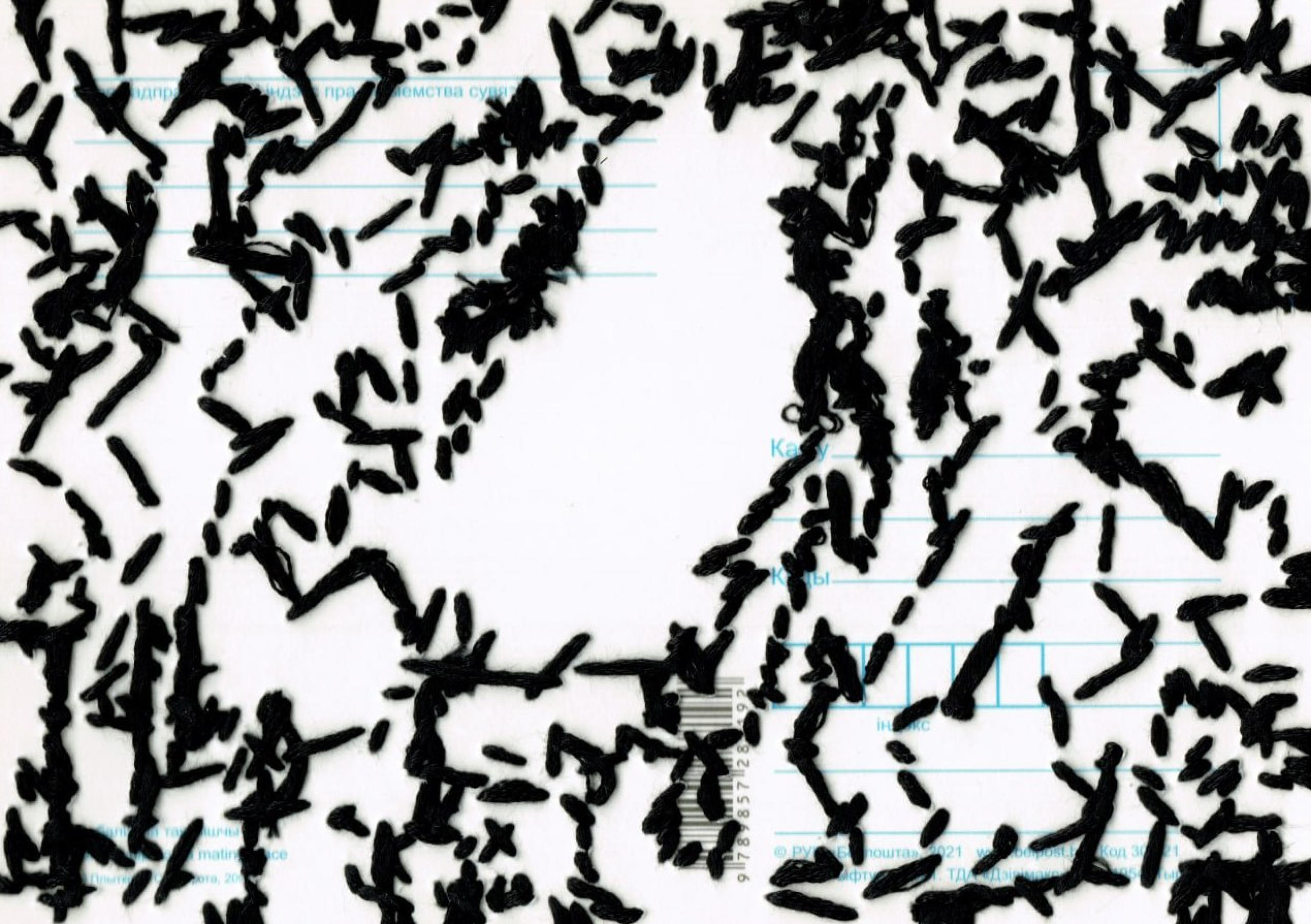
The project Postcards from the Homeland is based on a series of postcards issued by the Belarusian State Post. It is part of my long-term project Home, which includes a series of performances, videos, photographs, objects, and curatorial projects.
Postcards from the Homeland is a project in which I explore the interaction between official narratives and personal space through collecting, working with local materials, and traditional practices. Due to its simplicity and functionality, the postcard becomes a site for discussions on self-censorship, personal boundaries, safety, language, and power. A private postcard collection transforms into a media diary or an instruction manual.
︎︎︎ Volha Maslouskaya ︎
Volha Maslouskay is an artist and curator, born in Brest, Belarus, in 1974.
Volha Maslouskaya is an interdisciplinary artist and curator working with performance, video art, objects, photography, and painting. She develops both solo projects and collaborative works as a member of the Bergamot art group, which she co-founded with Raman Tratsiuk in 1998 in Brest, Belarus.
Her artistic practice engages with themes of communication, control, power, boundaries, exclusion, introspection, gender relations, and social roles.
The beginning of work on the series, developing the concept of embroidery on objects. This stage of the project involved research, with particular attention to the concept of mimicry and strategies of adaptation in unstable conditions.
Mimicry is understood as a way of interacting with an aggressive environment. In nature, some organisms imitate others — sometimes even predators — to avoid danger.
Beyond its biological dimension, I examine mimicry in a cultural and historical context: it is connected with postcolonial discourse, concepts of identity, and guerrilla tactics.
In “Mimicry and Man”, Homi Bhabha presents his concept of mimicry. He argues that the colonizer seeks to improve the other and make them resemble themselves, but in a way that preserves differences. By doing so, they cannot fully transmit their beliefs to the colonized, who will always remain “almost white, but not white.” The main argument of the author is that mimicry can, even unintentionally, serve as an effective strategy of resistance. Although the colonized rarely realize it, through mimicry they subvert the systems imposed by the colonizer.
The project Postcards from the Homeland is based on a series of postcards issued by the Belarusian State Post. It is part of my long-term project Home, which includes a series of performances, videos, photographs, objects, and curatorial projects.
Postcards from the Homeland is a project in which I explore the interaction between official narratives and personal space through collecting, working with local materials, and traditional practices. Due to its simplicity and functionality, the postcard becomes a site for discussions on self-censorship, personal boundaries, safety, language, and power. A private postcard collection transforms into a media diary or an instruction manual.
︎︎︎ Volha Maslouskaya ︎
Volha Maslouskay is an artist and curator, born in Brest, Belarus, in 1974.
Volha Maslouskaya is an interdisciplinary artist and curator working with performance, video art, objects, photography, and painting. She develops both solo projects and collaborative works as a member of the Bergamot art group, which she co-founded with Raman Tratsiuk in 1998 in Brest, Belarus.
Her artistic practice engages with themes of communication, control, power, boundaries, exclusion, introspection, gender relations, and social roles.